American-Made Time Recording Clocks
This collection represents the evolution of American time recording technology from the 1890s through the 1920s. From early dial recorders to sophisticated card systems, these clocks revolutionized workplace attendance tracking and helped build the foundation for modern time management systems.
Dial recorders were an early form of time recording technology where employees would use a key or handle to mark their arrival and departure times on a circular dial. The mechanism would print a mark on paper or porcelain dials, creating a permanent record of attendance.
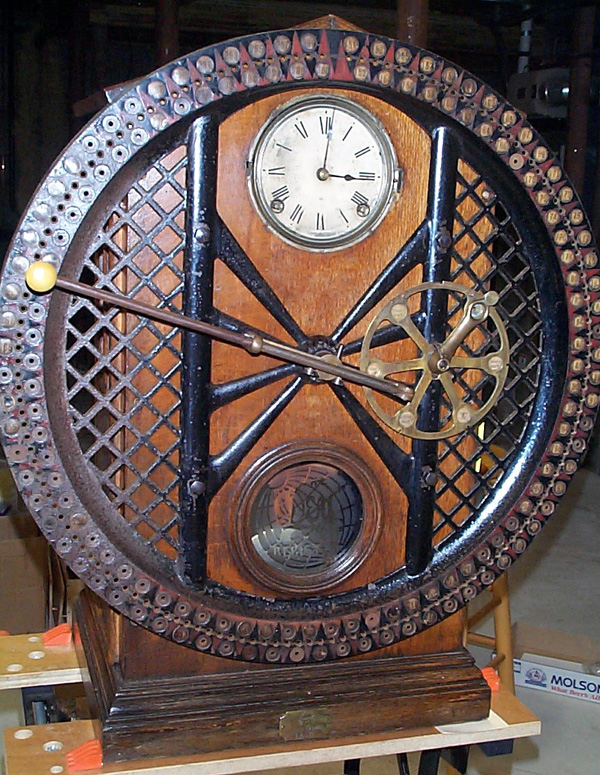
A unique dial recorder made by the predecessor company of the Dey Time Register Company of Syracuse, NY. Extensive company data is presented with a detailed view of this early time recorder.
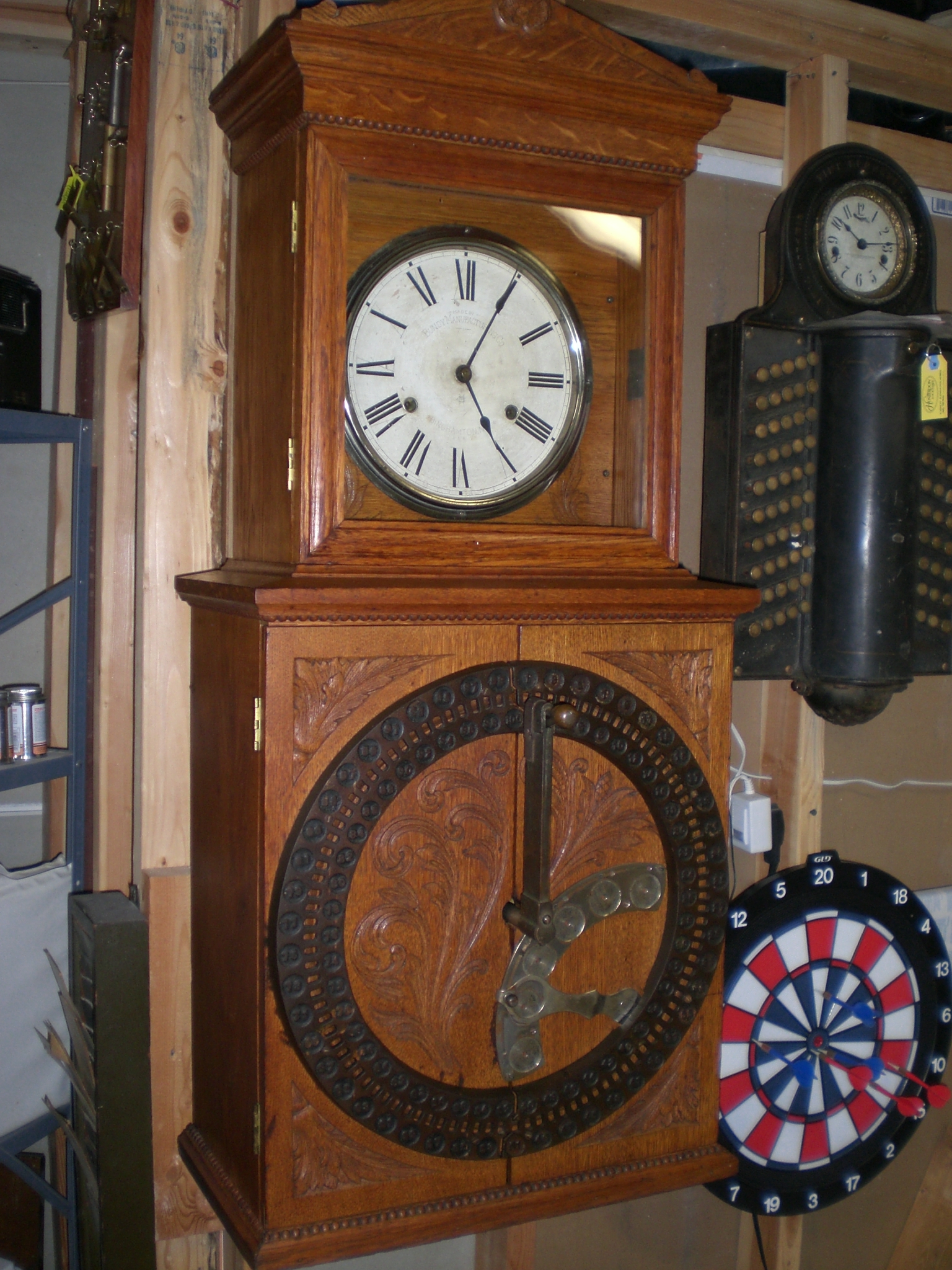
A very rare example of a Bundy designed, patented and manufactured dial recorder. Few examples of this clock are known as this model was not very popular in the 1890s.
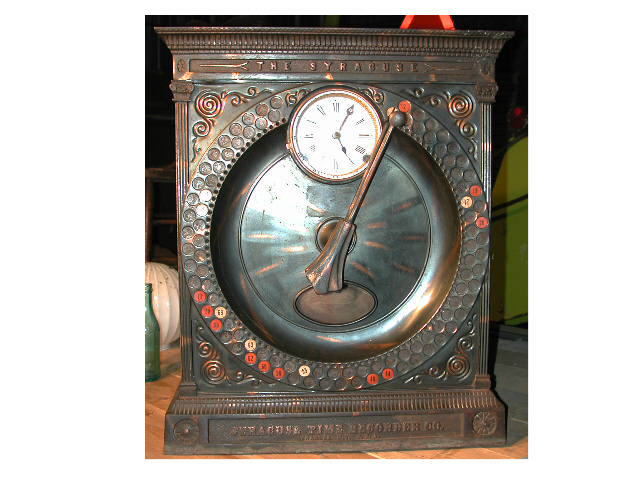
A heavy, cast iron dial recorder made through about 1910. Syracuse was purchased by ITR in 1908, and few examples were sold by ITR thereafter.
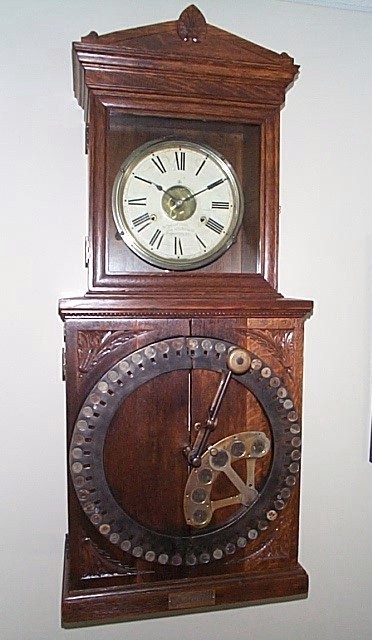
A rare example of a Bundy designed and patented dial recorder which was manufactured to compete against the Dey dial recorder. This is a 50 employee dial recorder - the only known example.
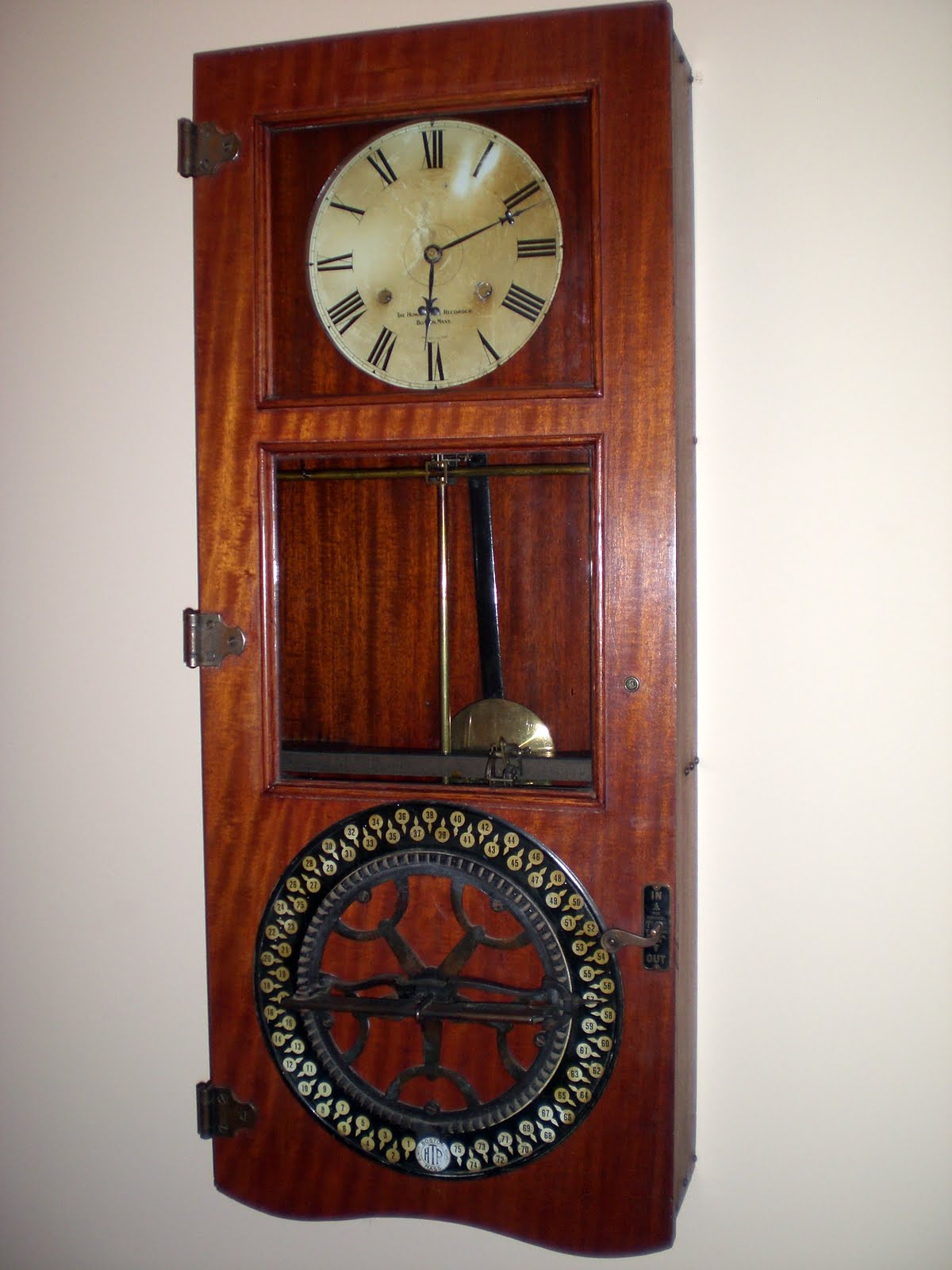
A dial recorder made by a company associated with the E. Howard Clock Co., a prestigious American clock manufacturer.
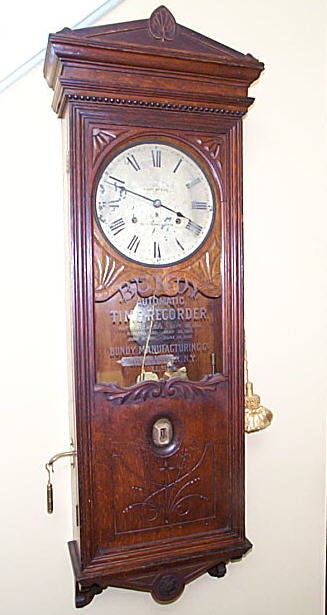
Key recorders were sophisticated mechanical time clocks where each employee had an individual key. When the key was inserted and turned, the clock would record the time on a paper roll or card, creating a permanent record of when each employee arrived or left.
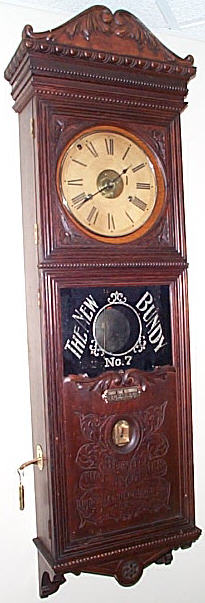
A complete Bundy with an early case design and etched glass in the door. An early example of an original Bundy made prior to the formation of ITR in 1901.
Originally sold to the US Postal Service. The Bundy No. 7 is very scarce. This clock has two individual doors as well as an alarm attachment which will ring a large bell at predetermined times.
A complete Bundy Key Recorder manufactured for the Great Britain market and made in Binghamton, NY. This Bundy was made after the formation of ITR in 1901.
Card recorders represented the next evolution in time recording technology. Each employee had a time card that would be stamped by the clock, creating a more detailed record of attendance. This section also includes other specialized recording devices such as in-out recorders and watchman's clocks.
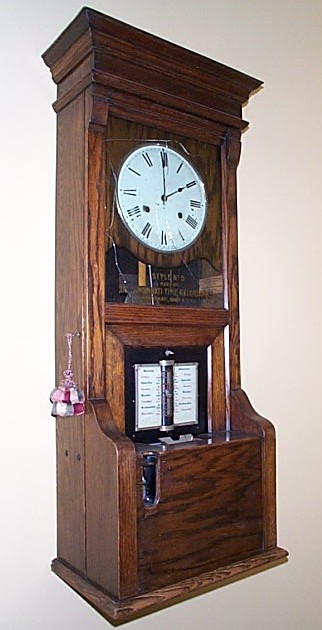
A very early Cincinnati card recorder from the late 19th century.
An example of a rare "In - Out" Model No. 2 for 100 employees. This system allowed employees to track both their arrivals and departures.
A very unique Autograph Recorder that allowed employees to sign their name along with the time stamp.
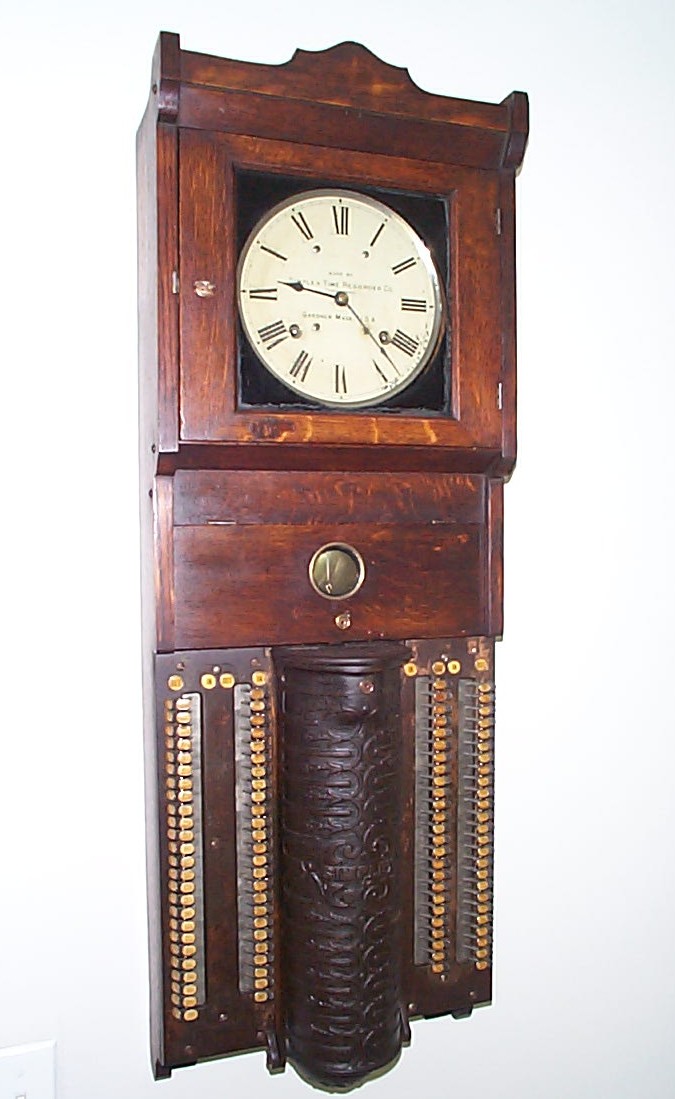
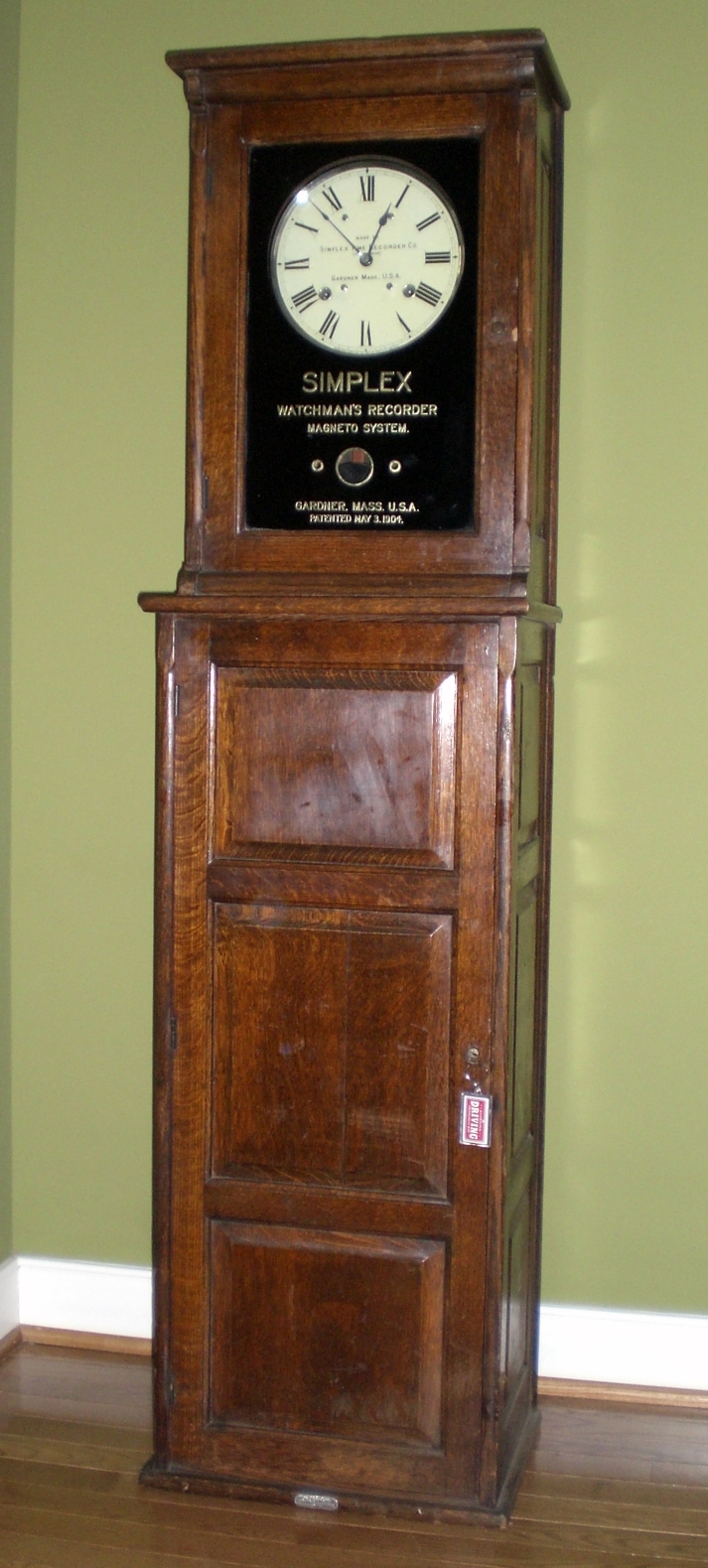
A central station watchman's clock used for security patrol verification.